


DANIEL J. HENTZ/WOODS HOLE OCEANOGRAPHIC INSTITUTION (SUBHAS)
OCEAN SCIENTIST
Adam Subhas
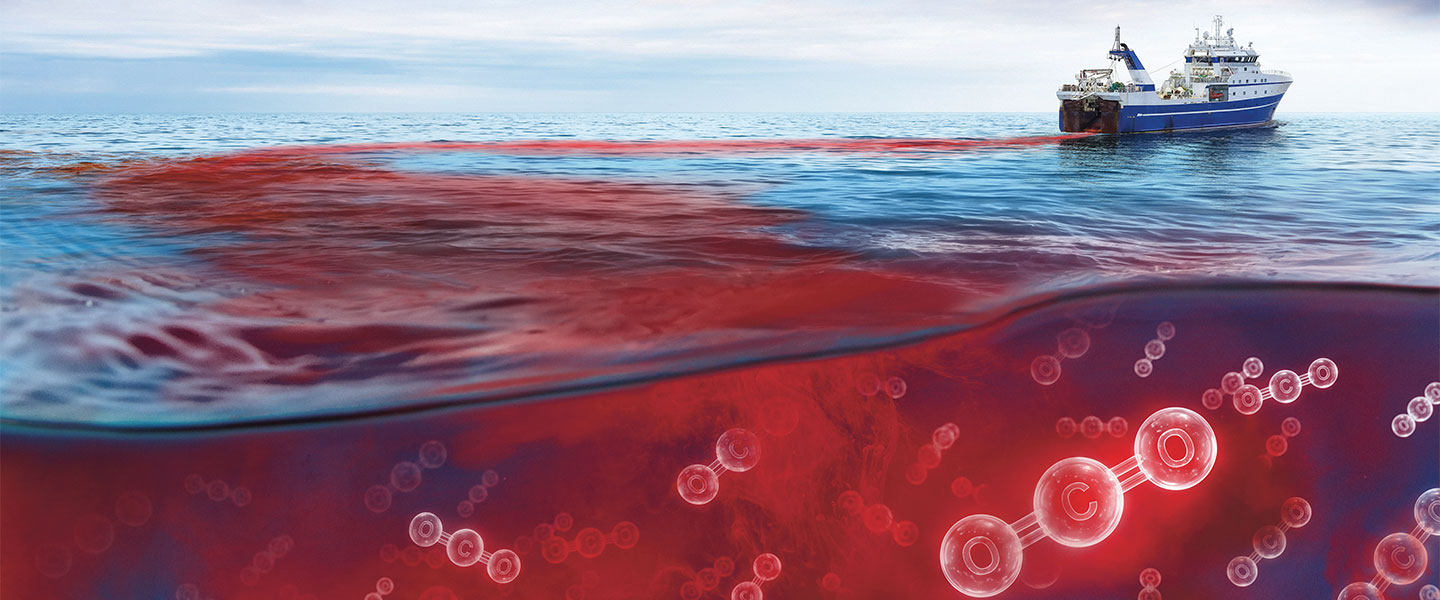
Last year, a ship just off the coast of Massachusetts pumped thousands of gallons of red liquid into the ocean. A trail of scarlet fluid spread out behind the vessel. Anyone watching might have wondered: Was a beverage company getting rid of expired fruit juice? Were polluters dumping chemical waste?
The reality was nothing so scandalous—but it was unusual. The red liquid was part of an experiment. Its goal was to test whether changing the chemistry of seawater could help cool the planet.
Right now, the experiment’s results look promising. But there’s a long way to go before this method of altering the oceans to counteract climate change could be deployed on a global scale. Here’s what the investigation has revealed so far about how Earth’s oceans and climate are connected.
Last year, a ship was sailing off the coast of Massachusetts. It pumped thousands of gallons of red liquid into the ocean. The scarlet fluid spread out behind the ship. It was a puzzling sight. Was a beverage company getting rid of old fruit juice? Were polluters dumping chemical waste?
The real story wasn’t that shocking, but it was unusual. The red liquid was part of an experiment. It changed the chemistry of seawater. The goal was to see if this could help cool the planet.
Right now, the experiment’s results look promising. The idea is to alter the oceans to fight climate change. But there’s a lot to do before this method could be used worldwide. Here’s what the study has revealed about the connection between Earth’s oceans and climate so far.