
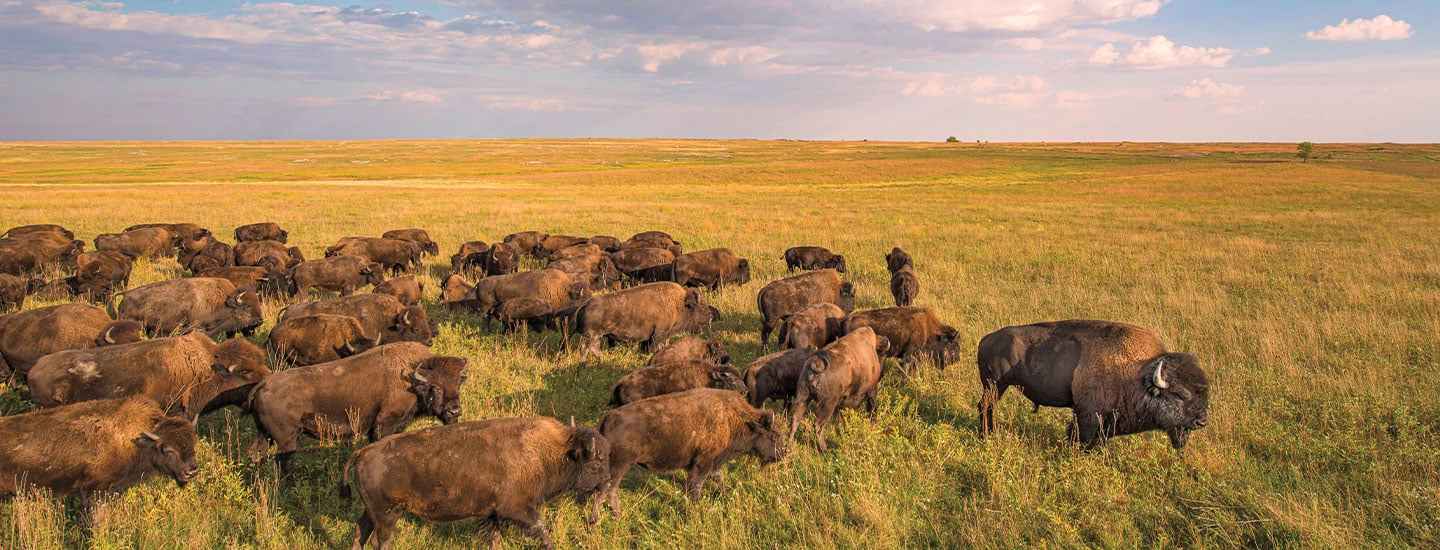

Wayne Frederick, a rancher and member of the Rosebud Sioux Tribe, has spent his whole life around bison. He grew up listening to the huge, woolly animals snort and grunt as his tribe’s herd thundered across their 7,000-acre canyon in South Dakota. Today Frederick manages his own herds. For him, raising bison is more than a job—it’s a cultural responsibility. “The honor of raising bison is something I really cherish,” he says.
Bison are the largest living animal native to North America. Vast numbers once roamed the continent (see “Shrinking Herds”). For thousands of years, Indigenous people living across what is now known as the Great Plains—including members of the Rosebud Sioux Tribe—relied on bison for food. They also used the animals’ skins for clothing and shelter, and their bones and horns for tools.
Wayne Frederick has spent his whole life around bison. He’s a rancher and member of the Rosebud Sioux Tribe. Frederick grew up to the sounds of his tribe’s herd in South Dakota. The huge, woolly animals snorted and grunted as they thundered across their 7,000-acre canyon. Today Frederick manages his own herds. For him, raising bison is more than a job. It’s a cultural responsibility. “The honor of raising bison is something I really cherish,” he says.
Bison are the largest living animal native to North America. Vast numbers once roamed the continent (see “Shrinking Herds”). Members of the Rosebud Sioux Tribe and other Indigenous people lived across the area that is now called the Great Plains. For thousands of years, they relied on bison for food. They also made clothing and shelter from bison skins. And they used the animals’ bones and horns for tools.