

EVAN-AMOS VIA WIKIMEDIA COMMONS
THE ORIGINAL FREEZE-DRIED SWEET
Food for astronauts is often freeze- dried to make it lighter and easier to transport. In 1973, NASA started selling freeze-dried ice cream so the public could try astronaut food. It is still sold at museums—although astronauts have never actually taken it to space.
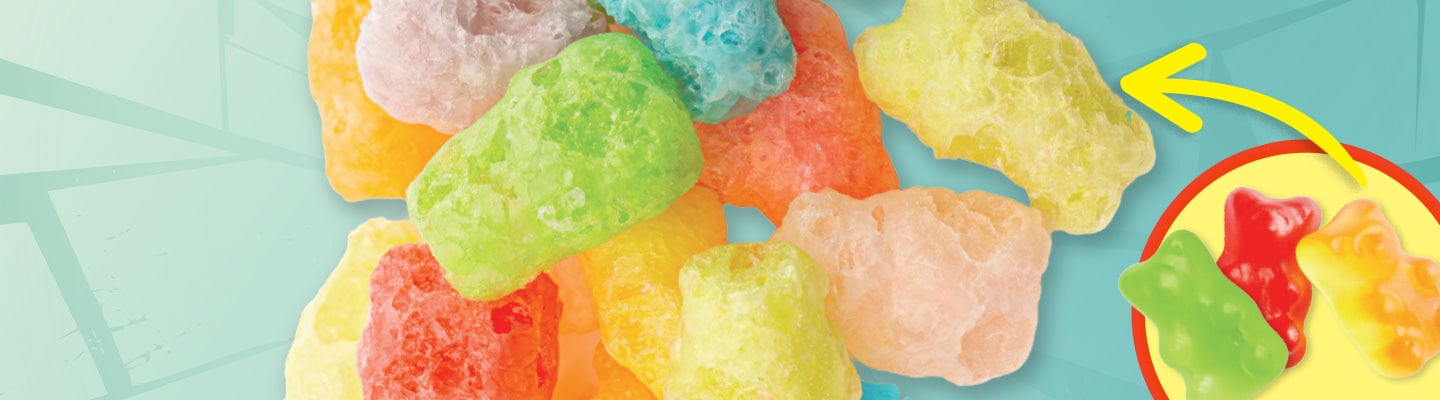
When you bite into a gummy bear, you expect it to be chewy and soft. But imagine chomping down on one of these sweets and—CRUNCH! It crumbles into a tangy powder. That’s what happens when you eat freeze-dried candy!
A few years ago, freeze-dried candy exploded in popularity on YouTube and TikTok. People experimented by putting different candies in a freeze dryer—a machine used to remove moisture from food. In some cases, this would create “a puffed-up, crunchy version of the original candy, with a more intense flavor,” says Richard Hartel, a professor of food engineering at the University of Wisconsin, Madison. Candy companies caught on to this trend. Now freeze-dried sweets are available at most grocery stores.
Bite into a gummy bear. You expect it to be chewy and soft. But imagine chomping one of these sweets and—CRUNCH! It crumbles into a tangy powder. That happens when you eat freeze-dried candy!
A few years ago, freeze-dried candy became extremely popular on YouTube and TikTok. People experimented with different candies. They put them in a freeze dryer. This machine removes moisture from food. In some cases, this would create “a puffed-up, crunchy version of the original candy, with a more intense flavor,” says Richard Hartel. He’s a professor of food engineering at the University of Wisconsin, Madison. Candy companies picked up on this trend. Now most grocery stores carry freeze-dried sweets.