


It’s a warm night on a beach in Central Mexico. Dozens of scientists and locals are gathered along the shore. They trudge through the sand, scanning the dark waves. Suddenly, someone spots movement in the water: It’s a green sea turtle!
Each year, thousands of female green sea turtles return to this beach—the same one where they were born—to dig nests and lay their eggs (see “A Sea Turtle’s Life,”, below). And when they arrive, conservationists are waiting to protect the animals—and their eggs—from predators and humans looking to harm them. “We’re protecting them because that’s what you do when you love something,” says Bryan Wallace. He’s a wildlife biologist at Ecolibrium, an environmental organization that supports sea turtle recovery efforts in Mexico and Central America.
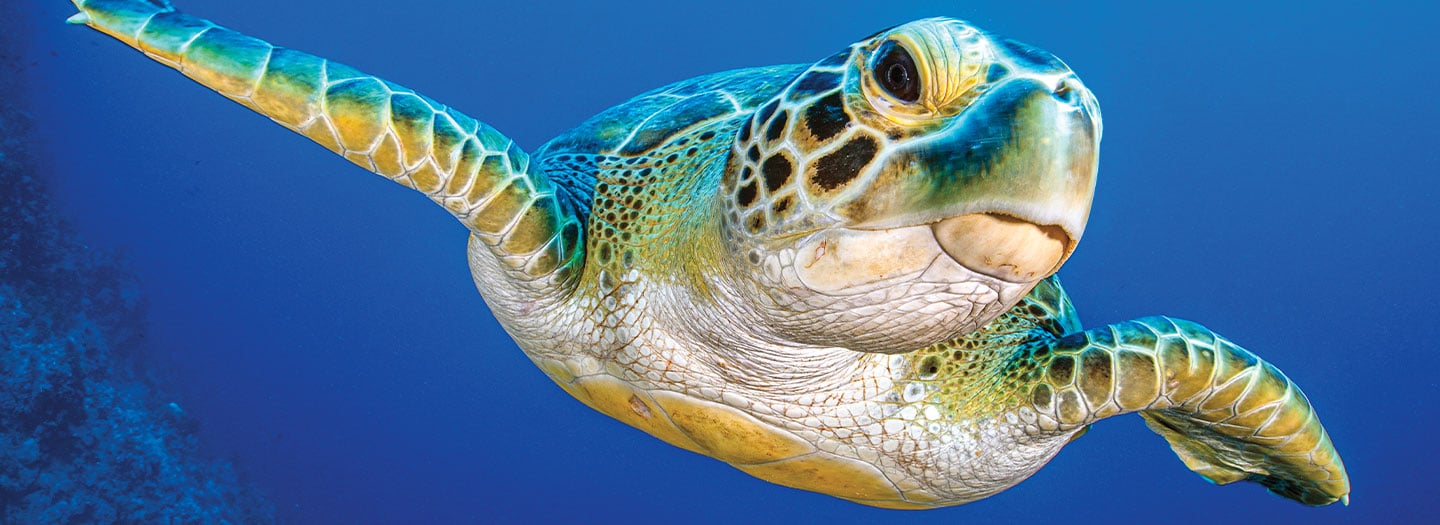
With their brown-scaled flippers and intricately patterned shell, green sea turtles are iconic marine animals. You may recognize them as the inspiration for the character Crush in the movie Finding Nemo. Green sea turtles were once abundant in tropical waters around the globe. But hunting, fishing, and habitat loss caused their populations to plummet. By the 1970s, green sea turtles were declared endangered—or on track to disappear completely.
But that is no longer the case. This past October, the International Union for the Conservation of Nature (IUCN) announced that it was taking green sea turtles off its endangered list. Thanks to decades of conservation efforts, the species is officially on the rebound!
It’s a warm night on a beach in central Mexico. Dozens of scientists and locals gather along the shore. They plod through the sand as they scan the dark waves. Then someone spots movement in the water. It’s a green sea turtle!
Each year, thousands of female green sea turtles come to this beach. They were born here. Now they return to dig nests and lay their eggs (see “A Sea Turtle’s Life”). And when they arrive, conservationists are waiting. They protect the animals and their eggs so predators and people don’t harm them. “We’re protecting them because that’s what you do when you love something,” says Bryan Wallace. He’s a wildlife biologist at Ecolibrium. This environmental organization supports sea turtle recovery efforts in Mexico and Central America.
Green sea turtles are well-known marine animals. They have brown-scaled flippers and shells with detailed patterns. You may recognize them from the movie Finding Nemo. They inspired the character Crush. In the past, green sea turtles were abundant in tropical waters around the globe. But their populations plummeted because of hunting, fishing, and habitat loss. By the 1970s, green sea turtles were declared endangered. They were on track to disappear completely.
But that is no longer true. This past October, the International Union for the Conservation of Nature (IUCN) took green sea turtles off its endangered list. Decades of conservation efforts have paid off. The species is officially on the rebound!