

SHUTTERSTOCK.COM

STANDARDS

NGSS: Core Idea: PS1.A, ESS3.A

CCSS: RI.2

TEKS: 6.12A, 7.14B, 6.5D, 6.6B, 7.5D, 8.5D, CHEM.3A

Standards

Marshmallow Madness!

Explore the science behind one of winter’s coziest treats.

AS YOU READ, THINK ABOUT how chemistry is involved in creating many of the foods we eat.

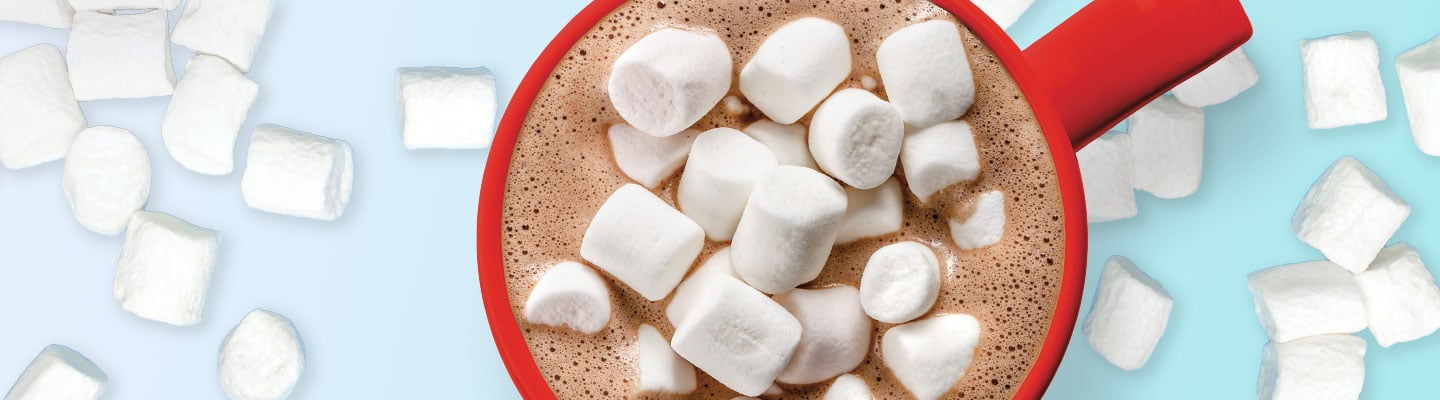
On a chilly winter’s day, nothing hits the spot quite like a cup of hot cocoa topped with sweet, fluffy marshmallows. These squishy treats have a long—and surprising—history. Marshmallows started out as a plant-based medicine. Over time, candymakers transformed them into the factory-made puffs we know today.

Marshmallows get their name from the marsh mallow plant, native to marshy areas of Europe, western Asia, and northern Africa. Healers in many ancient cultures boiled the plant’s roots into a sticky syrup used to soothe coughs, ease stomach problems, reduce skin irritation, and heal wounds.

On a chilly winter day, a cup of hot cocoa hits the spot. It’s even better with sweet, fluffy marshmallows on top. These squishy treats have a long and surprising history. Marshmallows started out as a plant-based medicine. Candymakers transformed them over time. Today we know them as factory-made puffs.

Marshmallows get their name from the marsh mallow plant. It’s native to marshy areas of Europe, western Asia, and northern Africa. Healers in many ancient cultures boiled the plant’s roots into a sticky syrup. They used it to treat coughs, stomach problems, skin irritation, and wounds.

In the mid-1800s, French candymakers used the plant to create something closer to modern marshmallows. They cooked marsh mallow root syrup with egg whites and sugar. Then they hand-whipped the mixture into a foam and cut it into pieces after cooling, creating a throat-soothing candy. Eventually, gelatin replaced the plant syrup as a thickener for the foam, allowing producers to skip the time-consuming process of drying and boiling roots.

In the 1950s, American candy manufacturers took marshmallow-making to new heights. They eliminated eggs, relying on gelatin, sugar, and corn syrup for the foam’s structure. They also started machine-whipping the mixture, incorporating more air. That makes today’s marshmallows “really light, with a very low density [mass per volume]” compared with handmade treats of the past, explains Richard Hartel. He’s a food engineering professor at the University of Wisconsin-Madison. Using an extrusion process, manufacturers push this gooey, ultra-airy mixture out of tubes. Machines chop the resulting long strands into the tubular puffs we love today. SWEET!

In the mid-1800s, French candymakers used the plant. They created something more like modern marshmallows. They cooked marsh mallow root syrup with egg whites and sugar. Then they hand-whipped the mixture into a foam. After it cooled, they cut it into pieces to make a throat-soothing candy. Later, gelatin replaced the plant syrup as a thickener for the foam. Then producers could skip the long process of drying and boiling roots.

In the 1950s, American candy manufacturers changed marshmallow-making even more. They no longer used eggs. They relied on gelatin, sugar, and corn syrup for the foam’s structure. They also started machine-whipping the mixture. That adds more air than handmade marshmallows had in the past. So today’s marshmallows are “really light, with a very low density [mass per volume],” explains Richard Hartel. He’s a food engineering professor at the University of Wisconsin-Madison. Manufacturers use an extrusion process to push this gooey, ultra-airy mixture out of tubes. That creates long strands. Machines chop them into the tube-shaped puffs we love today. SWEET!

Who Invented Marshmallows?
Watch a video about early marshmallows.

COMMUNICATING INFORMATION: Based on the article, how do you think early marshmallows compared with the ones we eat now?

videos (1)
Skills Sheets (4)
Skills Sheets (4)
Skills Sheets (4)
Skills Sheets (4)
Lesson Plan (2)
Lesson Plan (2)
Text-to-Speech