

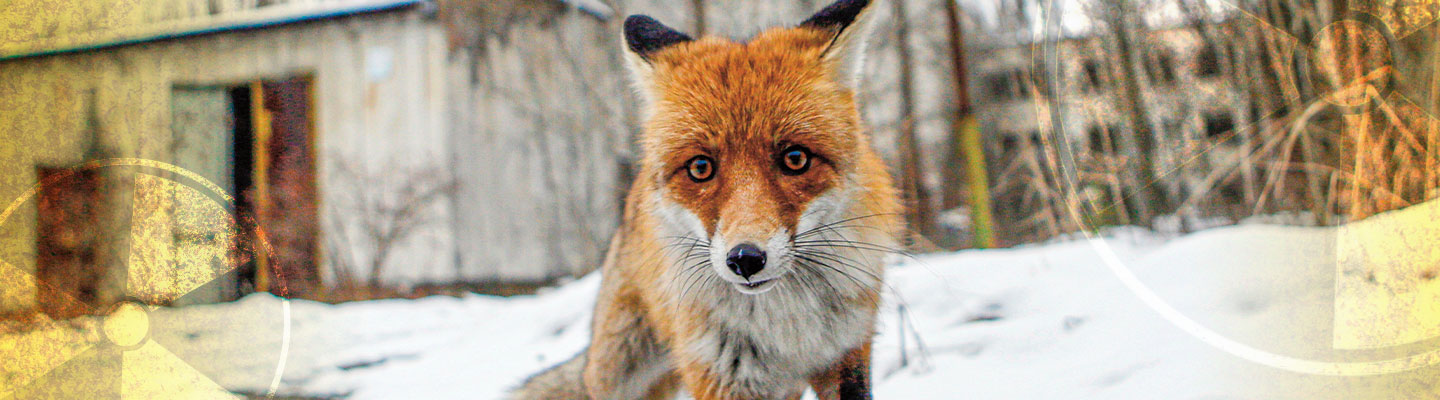

On April 26, 1986, the worst nuclear disaster in history occurred near the town of Chernobyl, Ukraine (then part of the Soviet Union). Explosions rocked a nuclear power station, sparking a large fire. Despite workers’ efforts to contain the blaze, huge amounts of radioactive gas, dust, and other material were released. Residents were forced to flee the region.
Radioactive material gives off high-energy particles and waves that can harm living things. Thirty people lost their lives in the accident and its immediate aftermath, most from radiation exposure. The area will remain radioactive for thousands of years, making it unsafe for the foreseeable future.
The worst nuclear disaster in history happened on April 26, 1986. It was near the town of Chernobyl, Ukraine. (The area was then part of the Soviet Union.) Explosions rocked a nuclear power station and sparked a large fire. Workers tried to contain the blaze. But huge amounts of radioactive gas, dust, and other material were released. Residents had to flee the region.
Radioactive material gives off high-energy particles and waves. They can harm living things. Thirty people died in the accident or shortly afterward, most from radiation exposure. The area will remain radioactive for thousands of years, so it will be unsafe far into the future.